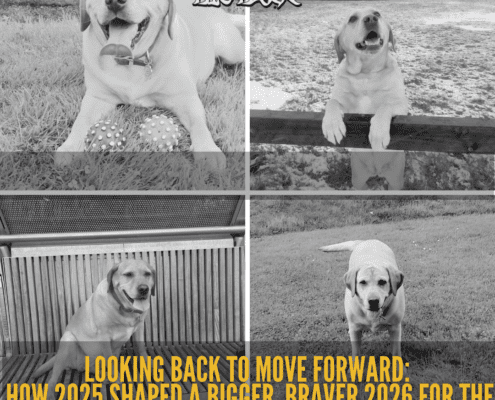
Looking Back to Move Forward: How 2025 Shaped a Bigger, Braver 2026 for The Big Bark
As I look back on 2025, I honestly don’t think I could have prepared myself for just how much this year would shape me, both personally and professionally. It has been a year of huge progress, proud moments, exhaustion, joy, grief, and reflection. A year that tested my resilience, a year that reminded me why I started The Big Bark Podcast in the first place, and reinforced just how powerful the bond between humans and dogs truly is.

Like every journey worth taking, 2025 came with incredible highs and heartbreaking lows.

The Highs: Growth, Milestones and Moments I’ll Never Forget

One of the standout moments of the year for me was attending Crufts. Being there, surrounded by people from all over the world who share the same passion for dogs, was both humbling and inspiring. It was a reminder that what we do at The Big Bark Podcast matters, and that there is space for Irish voices, Irish stories, and Irish welfare issues on an international stage.

2025 was also the year I made the decision to switch to video podcasts. This was a big step and not one taken lightly. It meant learning new skills, investing more time and resources, and pushing myself outside my comfort zone. I always said that I have a face for radio. But it was a brilliant decision that has completely changed how The Big Bark Podcast connects with its audience. Being able to see the conversations unfold, to capture emotion, body language, and authenticity, has added a whole new layer to the podcast and helped it grow in ways I’m incredibly proud of.

Another huge milestone came in October, when we recorded our first-ever live podcast episodes at Pet Expo. Standing there, microphones live, camera rolling, it was new and different. What started as an idea built on passion and persistence turned into live broadcasts in front of the very community the podcast was created for. Meeting listeners, supporters, rescues, and industry professionals face to face was one of the most rewarding experiences of the entire year.

One of the projects closest to my heart over the past 5 years but in particular in 2025 was the Irish Dog Calendar 2026. The latest edition took on the theme – Pawprints on the Heart. This calendar became so much more than a project. Working closely with animal rescues across Ireland, highlighting welfare issues, and giving dogs from across Ireland a platform to be seen and celebrated was incredibly important to me. The response was overwhelming. We ended the Irish Dog Calendar journey with our biggest edition ever, featuring 280 dogs, and successfully brought the project to a close on the highest possible note. Knowing that it helped raise awareness, support rescues, and bring people together is something I will always cherish. It also allowed me to remember and cherish my bond with a dog that had played such a massive

The Lowest Point: Losing Milly

For all the highs, 2025 also brought the deepest pain I have ever experienced.

Losing Milly, my beautiful girl, shattered me in ways I still struggle to put into words. She wasn’t “just a dog.” She was my constant, my comfort, my shadow, and my heart. Losing her absolutely crushed us all and left a hole in my heart that will never be filled.

Grief doesn’t arrive quietly. It changes how you think, how you feel, how you function. There were days when showing up felt impossible, yet Milly had already taught me something powerful — that love and loyalty deserve to be honoured, even in pain.

In a way only she could, Milly continued to guide me even after she was gone. Her life, her love, and the bond we shared became the inspiration behind the theme of the 2026 Irish Dog Calendar. “Pawprints on the Heart” exists because of her. Through that project, her legacy lives on — not just in photos or pages, but in the stories, emotions, and connections it created for so many others.

Looking Ahead to 2026: Purpose, Growth and Community

As I move into 2026, I do so with renewed purpose.

My focus is firmly on continuing to build The Big Bark Podcast, expanding its reach, strengthening its voice, and ensuring it remains a platform that genuinely serves the canine community in Ireland. I want to tell more stories, ask more difficult questions, and continue highlighting the incredible work being done by individuals, rescues, and organisations across the country.

Live events and more live broadcasts are very much part of that future. There is something special about bringing people together in real time, creating shared experiences, and having conversations that matter in front of the very community they impact. We’

2026 will also mark an important new chapter with the expansion of Big Bark News & Media. The aim is ambitious but clear: to build it into the leading source of canine news in Ireland, while also developing it as a dedicated media agency for the canine industry. This will include unique media features specifically designed for businesses working in the canine space, alongside tailored support and visibility for rescues and animal welfare organisations. More details on this will be announced in early 2026, and I cannot wait to share what’s coming next.

Big Bark After Dark: Where Dog People Meet

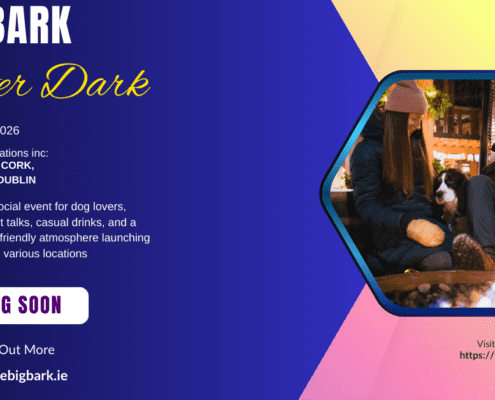
One of the ideas I’m most excited about bringing into 2026 is the launch of Big Bark After Dark — a series of dog friendly evening social events designed for dog lovers to meet, mingle, and get to know each other in a relaxed, fun setting. These nights are about bringing dog people together beyond daytime walks and online conversations, creating a space where shared love for dogs naturally sparks great chats, laughs, and maybe sometimes something more.

Yes, these are social events.
Yes, there’s a making friends element.
And yes — dogs are the ultimate icebreakers.

Big Bark After Dark will take place in carefully chosen venues, with a welcoming atmosphere, drinks, a few nibbles, conversation starters, and subtle prompts to get people talking. Whether attendees leave having made new friends, found their dog’s new walking buddy, or met someone to chat to on whatsapp with over a shared love of muddy paws and rescue stories, these events are about connection without pressure — just good people, good vibes, and dogs bringing humans together the way they always do best.

Gratitude

None of this — not the podcast, not the events, not the projects, and certainly not the strength to keep going — would be possible without the support of listeners, guests, partners, rescues, and the wider dog-loving community. Your messages, encouragement, and belief in what I’m building have meant more than you’ll ever know.

2025 changed me. It challenged me, broke me at times, and rebuilt me with a deeper sense of purpose. As I step into 2026, I carry everything I’ve learned — and I carry Milly with me in everything I do.

Thank you for being part of the journey.


Darragh
The Big Bark Podcast

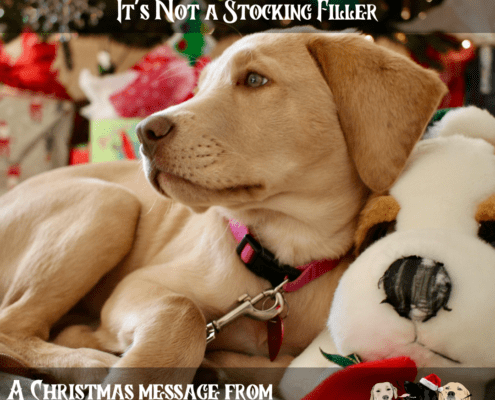
A Dog Is a Lifetime Commitment – It’s Not a Stocking Filler
A message from Big Bark News & Media on impulse buying, puppy farming and lifelong responsibility – Big Bark News & Media is calling on people to remember that a dog is for life, not just for Christmas.

Every year, dogs are bought on impulse in the run up to Christmas, only to be surrendered weeks or months later when reality sets in. A dog is not a novelty, a surprise or a seasonal gift. It is a long term responsibility that does not end when the decorations come down.

“As soon as the Christmas buzz is gone, the dog is still there and the work has only just begun,” said Darragh Bourke of Big Bark News & Media. “That’s when people realise they didn’t actually think this through.”

Giving a dog or puppy as a Christmas present is rarely a good idea. The excitement fades quickly, but the responsibility does not. Feeding, training, walking and caring for a dog is a daily commitment that lasts for years, not just the festive period.

“Christmas puppies are bought on emotion, not logic,” Bourke said. “And dogs are the ones who pay the price when that emotion wears off.”

Buying a dog or puppy for a child is especially problematic. No matter how much a child begs for one, they do not understand the responsibility involved. The excitement lasts minutes. They soon return to their games, consoles and screens, while the dog is left behind.

Puppies are messy, demanding and exhausting. Accidents in the house, chewed toys and destroyed Christmas presents are normal puppy behaviour. Children and adults alike lose patience fast, and too often that frustration is taken out on the dog through shouting, rough handling or punishment. Scolding a puppy for doing exactly what puppies are expected to do is wrong, unfair and entirely the fault of the humans involved.

“A puppy isn’t being bold, stubborn or difficult,” Darragh said. “It’s being a puppy. Punishing an animal for normal behaviour is a human failure, not a dog problem.”

Christmas is also one of the worst times of year to bring a puppy into a home. Winter weather makes walking difficult and training harder. Toilet training becomes more stressful, routines are disrupted and homes are often chaotic with visitors, noise and late nights.

“People massively underestimate how hard winter training is,” Bourke added. “Short days, bad weather and no routine is a terrible mix for a young dog.”

You might believe you are ready for a dog, and if you are, fair play. But being ready means doing proper research first. Learn about the breed, their temperament, exercise needs and common health issues. Too many dogs end up abandoned simply because the wrong breed was chosen for the wrong lifestyle.

“We see it all the time,” said Darragh. “High energy dogs in low energy homes, large breeds in tiny spaces, and then the dog is blamed for a bad human decision.”

We always recommend adopt, do not shop. Rescue centres are full of dogs waiting for their forever homes, including puppies. Adoption saves lives and gives dogs a second chance.

We know some people will still choose to buy from a breeder. If you do, do your homework. A responsible breeder will never meet you at the side of a road or hand a puppy over from a car boot. You should see the mother, ideally the father, and the conditions the dogs are raised in. If anything feels wrong, walk away and report it.

“If someone wants to meet you in a lay-by or a car park, run,” Bourke said. “That’s not a breeder, that’s a puppy farm, and people need to stop pretending they don’t know the difference.”

Do not make space for a Christmas puppy by abandoning an older dog at a rescue. If you can discard a dog who has given you years of loyalty, you will do the same to the puppy once it becomes inconvenient.

Darragh hit out at those people who dump the older dog to make room for the Christmas puppy – “A dog that’s given you a decade of loyalty deserves better than to be dumped for a newer model. “If you can do it once, you’ll do it again.”

A dog is a commitment of ten to fifteen years. Before bringing one home, do a proper budget. Food, collars, leads, beds, toys, training, grooming, vaccinations, parasite prevention, vet fees, emergency care and pet insurance all come at a cost.

“Love isn’t enough,” Bourke added. “Vet bills don’t care how good your intentions were.”

A dog is not a Christmas present. It is a living being that depends on you every single day of its life. If you cannot commit to that, do not get one.

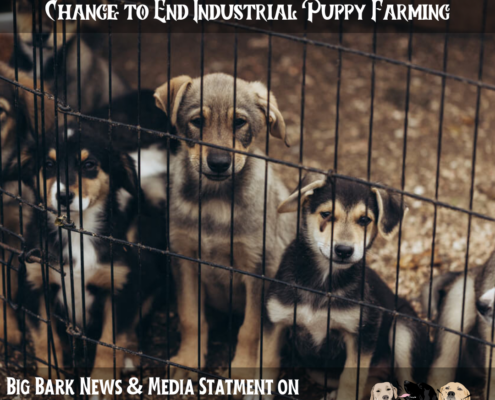
Why Ireland’s Dog Welfare Laws Must Change to End Industrial Puppy Farming
Why Ireland’s Dog Welfare Laws Must Change to End Industrial Puppy Farming:

By Darragh Bourke, Owner – Big Bark News & Media

Ireland likes to present itself as a nation of dog lovers. Our dogs are family members, companions, and a source of comfort and joy in our lives. Yet behind this image lies a reality that is deeply uncomfortable and impossible to ignore: Ireland has earned the label of the puppy farm capital of Europe, and it is a reputation we have done far too little to challenge.

For years, weak regulation, poor enforcement and political hesitation have allowed large-scale commercial dog breeding to flourish. Tens of thousands of puppies are bred annually on this island, many for export, while their mothers endure lives of repeated breeding, confinement and neglect. This is not an accident of the system — this is the system.


Outrage at Industrial-Scale Puppy Farming

At Big Bark News & Media, we are outraged that in modern Ireland industrial puppy farms can legally operate with hundreds of breeding dogs on a single site. Some of the largest facilities on the island are permitted to keep up to 900 breeding bitches, many of whom are producing more than two litters per year on average.

This level of exploitation would be unthinkable in almost any other area of animal welfare — yet it is tolerated when profit is involved.

This reality was laid bare in the Channel 4 documentary In Too Deep by Kyle Thomas, which investigated large-scale puppy farming and the supply chains feeding the UK and European puppy trade. Central to that investigation was Hamilton’s Farm, a large commercial breeding operation in Northern Ireland, repeatedly cited as one of the most significant high-output puppy breeding sites operating on the island.

The documentary highlighted the industrial scale of the operation, the concentration of breeding businesses registered to a single location, and the sheer volume of puppies being produced year after year. Regardless of jurisdictional boundaries, the exposure of Hamilton’s Farm demonstrated what happens when scale is prioritised over welfare — breeding dogs reduced to units of production, with their physical and psychological needs secondary to output.

While the programme focused heavily on the UK market, the implications for Ireland are impossible to ignore. This is the same model of large-scale breeding that Irish legislation has historically allowed to exist and expand.

This is not responsible breeding. It is factory farming of dogs.


Why the Animal Welfare (Amendment) Bill 2025 Is So Important

Against this backdrop, the Animal Welfare (Amendment) Bill 2025, introduced by Social Democrats TD Jennifer Whitmore last thursday, represents a long-overdue and genuinely meaningful step in the right direction.

Ireland’s current framework, based largely on the Dog Breeding Establishments Act 2010, is fundamentally flawed. It places no realistic cap on the scale of breeding operations, allows excessive lifetime breeding, and fails to prioritise the physical and psychological wellbeing of dogs.

Jennifer Whitmore’s Bill proposes critical reforms, including:

  • A cap on the number of breeding bitches per establishment (30 breeding bitches)

  • Clear minimum and maximum breeding ages (no younger than 15 months, no older than 8 years)

  • Limits on the number of litters a female dog can produce annually and over her lifetime (4 litters)

  • Improved standards around staffing, care and oversight (10:1 staffing ratio)

  • Stronger protections for puppies before they are separated from their mothers (minimum separation age – 10 weeks)

These proposals acknowledge what animal welfare advocates have said for years: scale matters, and welfare cannot be guaranteed in massive, industrial breeding facilities.

This Bill does not go far enough on its own — but it is a vital foundation for future reform.


Ireland: The Puppy Farm Capital of Europe

On the Limerick Today Show with Joe Nash, I described Ireland as the puppy farm capital of Europe — not to provoke, but to reflect reality. That label exists because Ireland exports puppies at scale while failing to adequately protect the dogs left behind in breeding sheds.

Rescue organisations, welfare groups and vets across the country are dealing daily with the fallout: traumatised animals, genetic health issues, behavioural problems and overwhelmed rescue systems. The cost of inaction is being paid by charities and volunteers, while the profits flow elsewhere.

This is not just an animal welfare issue — it is a moral failure.


We Must Do More

While we strongly welcome Jennifer Whitmore’s Bill, Ireland must be braver. Incremental reform cannot be the end goal when the suffering is so widespread and so well documented.

We need:

  • Stronger enforcement powers for local authorities

  • Proper resourcing for inspections and prosecutions

  • Meaningful penalties that act as deterrents, not minor business costs

  • A national commitment to reducing large-scale commercial breeding in favour of genuine welfare-led practices

Most importantly, we need political leadership that is willing to say clearly: dogs are not commodities.


Our official Position:

At Big Bark News & Media, we fully support the Animal Welfare (Amendment) Bill 2025 and commend Jennifer Whitmore for bringing this issue back into the national conversation. We urge all TDs and Senators to support it and to commit to building on it with even stronger protections in the years ahead.

Ireland can and must do better for its dogs. Until we confront the reality of puppy farming head-on, our reputation — and our conscience — will remain stained.

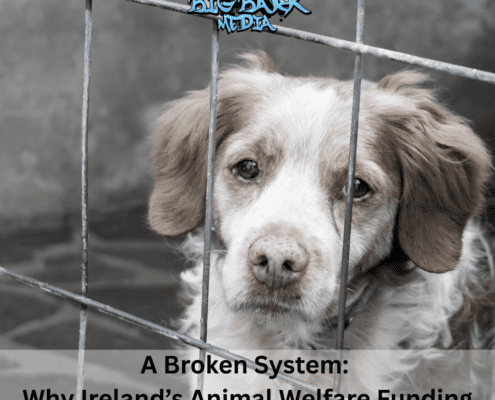
A Broken System: Why Ireland’s Animal Welfare Funding Fails Frontline Rescues
The Big Bark Podcast wishes to formally respond to the Department of Agriculture, Food and the Marine’s recent announcement confirming €6.4 million in funding allocated to 94 animal welfare charities across Ireland.

While any increase in funding for animal welfare is welcome in principle, we must state clearly and unequivocally that the current funding model — and its outcomes — are deeply concerning and wholly unjust.

A DISPROPORTIONATE AND FUNDAMENTALLY FLAWED ALLOCATION

Based on the published figures, approximately one third of the entire funding allocation was awarded to a single organisation — the newly established NSPCA.
This organisation was formed earlier this year following the merger of the DSPCA and ISPCA.

To place this allocation in context, DSPCA’s 2024 consolidated financial statements show a turnover exceeding €4.5 million, with substantial income generated through:

  • Boarding services (€1.24 million)

  • Donations and memberships (€958,000)

  • Rehoming fees (€308,000)

These figures clearly demonstrate access to robust commercial and fundraising income streams that many rescues across Ireland simply do not — and cannot — access.

FRONTLINE RESCUES LEFT BEHIND

In stark contrast, numerous small and medium-sized rescues operating at the coalface of Ireland’s animal welfare crisis received minimal funding, despite being overwhelmed by rising intake, veterinary costs, and chronic capacity issues.

Examples from the lower end of the funding scale include:

  • MADRA – €40,000

  • Limerick Animal Welfare – €120,000 (~5% of NSPCA’s allocation)

  • My Lovely Horse Rescue – €90,000

  • Longford SPCA – €4000

  • Mayo SPCA – €36,375

  • Star Rescue – €34000

  • West Cork Animal Welfare Group – approx. €40,000

  • KWWSPCA – approx. €80,000

  • Haven Rescue – €25000

  • Mollie Moos Rescue – €4000

  • A Dogs Life – €5000

To put this disparity into perspective, some of these rescues received less than 5% of the funding awarded to the NSPCA, despite dealing daily with abandonment, cruelty cases, emergency veterinary interventions, and long-term rehabilitation — often with no paid staff and entirely volunteer-led operations.

OUTRAGE IS NOT ONLY JUSTIFIED — IT IS NECESSARY

The Big Bark Podcast believes that public outrage is both understandable and warranted.

Many of these smaller rescues:

  • Have no boarding facilities

  • Cannot generate income through training, kennelling, or commercial services

  • Are already subsidising the State by stepping in where statutory enforcement and resources fall short

Yet they are expected to survive on crumbs, while organisations with established infrastructure and income-generation capacity receive vastly disproportionate allocations.

This is not a reflection of need.
This is not equity.
And it is certainly not a sustainable approach to animal welfare.

A SYSTEM THAT REWARDS SCALE OVER SUFFERING

The current funding framework appears to prioritise organisational scale and administrative capacity, rather than:

  • Volume of animals rescued

  • Severity of welfare cases handled

  • Reliance on volunteer labour

  • Lack of alternative income streams

This approach risks entrenching inequality within the sector and pushing smaller rescues — many of whom are lifelines in their communities — to breaking point.

A CALL FOR URGENT REFORM

The Big Bark Podcast calls for:

  • A transparent, needs-based funding review

  • Greater weighting for rescues without commercial income

  • Recognition of the critical role played by small, specialist, and breed-specific charities

  • Meaningful consultation with frontline organisations before future allocations

Animal welfare funding must not become a balance-sheet exercise.
It must be grounded in fairness, urgency, and the real conditions faced by those doing the hardest work with the fewest resources.

Ireland’s animals deserve better.
And so do the people who fight for them every single day.

The Big Bark Podcast
Advocating for animals. Amplifying the voices of rescue.

Big Bark News & Media calls on Irish public – Do not vote for Heather Humphreys in the upcoming presidential election

Big Bark News & Media calls on Irish public — Do not vote for Heather Humphreys in the upcoming presidential election

To the people of Ireland:

As dog-lovers, animal-welfare advocates and citizens who care deeply about the values of compassion, dignity and protection for all sentient beings, we at Big Bark News & Media issue a clear call: Do not vote for Heather Humphreys in the presidential election this coming Friday.

Our reasons are outlined below, all connected to her record in animal welfare — a record which we believe is profoundly at odds with the moral standing we expect from the highest office in our country, that of President of Ireland (“Uachtarán na hÉireann”).

  1. She has repeatedly opposed bans on hare-coursing, fox-hunting and badger-culling
    During her time in government, Heather Humphreys has supported licences for hare-coursing, has defended it as a “rural pursuit” and has argued against banning it—even when the weight of public opinion and animal-welfare science favour a prohibition. For example, one article quotes activists that she approved of “barbaric blood-sports such as hare-coursing” 
  2. She has publicly declared support for “rural pursuits” including fox-hunting
    In recent media appearances she has said that people should be allowed to enjoy rural activities, and that fox-hunting in particular is a legitimate rural pursuit. One social-media clip claims she stated she “would support all rural activities” when asked whether she supported fox-hunting.

    Also, a synopsis of her campaign coverage noted that the Irish Council Against Blood Sports urged voters to reject her because she approved of “barbaric blood-sports such as hare-coursing”.

    This shows an attitude toward fox-hunting/hare-coursing not of opposition, but of tacit or open endorsement—something entirely inconsistent with the presidency being a guardian of decency and universal welfare. 
  3. She is responsible for the introduction of the XL Bully legislation — which many animal charities say was rushed, ineffective and poorly consulted
    As Minister for Rural & Community Development, Heather Humphreys signed the regulations to ban XL Bully-type dogs in Ireland, effective initially 1 October 2024 for import/breeding/rehoming and 1 February 2025 for ownership.


However, animal-welfare groups have criticised the legislation as very ineffective, introduced with minimal consultation of the animal-loving community, and creating confusion and panic among responsible dog-owners.

In other words: rather than a thoughtful, welfare-first reform, the legislation appears to have been hurried and more reactive than constructive — which raises questions about her approach to animal-welfare policy.


  1. Interference in an animal-cruelty case:

    Perhaps most concerningly, Heather Humphreys has been implicated in what appears to be an interference in a serious animal-welfare prosecution.
    In this case, a local Co. Monaghan farmer, Brian Wright, who had previously been convicted of animal-cruelty offences (in 2008 and 2017) and whose farm was documented as having severely injured cattle, was facing fresh prosecution in early 2020.

    Shortly before the court date, a letter was forwarded by Humphreys’s office to the Secretary-General of the Department of Agriculture, Food and the Marine, which was delivered on behalf of a family associate of Wright. Soon after, the prosecution was abruptly withdrawn.

    Although Humphreys denies she made representations and insists she “simply passed on a letter” from a constituent without expressing a view, a former departmental veterinary inspector, Kieran Devlin, has publicly stated he was “aghast” at the decision to drop the case given the strength of the evidence, and believes the intervention triggered the collapse of the prosecution.

    Furthermore, internal departmental documents show the decision to drop the case was described in part as a “policy decision” rather than a purely legal or evidential one.

    For an aspiring President to have been involved — directly or indirectly — in such a case, raises serious concerns about impartiality, accountability and the prioritisation of animal welfare. 


Why the above matters for the Presidency:

The office of President of Ireland is more than a ceremonial role: the President can refer bills to the Supreme Court for a test of constitutionality, can act as moral guardian of national affairs and sets tone for what the country stands for.

We currently have the honour of a President — the incumbent Michael D. Higgins — who is widely recognised as a friend of animals, nature and the environment. To allow someone like Heather Humpreys with her record on animal welfare to enter Áras an Uachtaráin would, in our view, be a betrayal of animal-lovers everywhere, and could set back reforms in animal welfare for years.

What we are calling for:

We call on all animal-lovers, dog-owners, wildlife-protectors and concerned citizens who value compassion and a progressive animal-welfare agenda: please do not vote for Heather Humphreys this Friday. The future of how Ireland treats its animals, how it honours wildlife, how it balances “rural pursuits” with universal decency, depends on stewardship at the highest level.

We urge you to vote for a candidate whose record respects and protects — not one whose record defends the opposite.

Thank you for your time, your care and your voice.
Big Bark News & Media


Legal & Public Interest Disclaimer
This statement by Big Bark News & Media is made in good faith and in the public interest, drawing on publicly available media reports and government records. It constitutes fair comment on matters of significant public concern, including animal welfare and the suitability of a public official for Ireland’s highest office.

Publication is protected under Article 40.6.1(i) of the Irish Constitution (freedom of expression), Article 10 of the European Convention on Human Rights, the European Media Freedom Act (EU 2024/1083), and the public-interest and fair-comment defences in the Defamation Act 2009 and Defamation (Amendment) Act 2022.

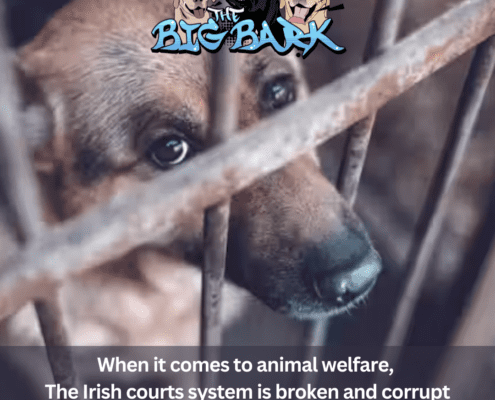
When it comes to animal welfare, The Irish courts system is broken and corrupt
Cork Woman convicted of 12 animal cruelty charges banned from owning animals walks away with minimal €250 fine

One has to question what in the absolute hell is wrong with the judiciary in this country? Does the Irish government not give a damn about Animal Welfare? Our judges certainly do not and this has been evidenced time and time again and most recently in Bandon District court this week, where a cork woman convicted of 12 counts of animal cruelty, received a 250 euro fine. A €250 fine? What an absolute utter joke!

The judges on these benches could wipe their arse with €250, it means that little to them. Is it a case in this absolute corrupt system of justice, that pleading guilty, gets you off the hook? 

Case Background:

So, let’s give some context on this here: Miriam Santry of The Meadows, Belgooly, Co Cork was banned from owning animals and ordered to surrender any animals in her possession to the ISPCA after being guilty on  kept over than a dozen dogs of various breeds in “Horrendous conditions” over an extended period. Ms Santry appeared before Bandon District Court facing a total of 12 summonses for alleged offences under the Animal Health and Welfare Act 2013. Santry pleaded guilty to the charges in front of Judge Philip O’Leary.

In evidence,  ISPCA Inspector Caroline Faherty said, she had first received complaints regarding the defendent in September 2022.  The complaints were in relatio to the conditions dogs were being kept in at two properties, one in Belgooly and the other in Kinsale.

Insp. Faherty told the court that she went to both properties on several occasions but was unable to make contact with Santry. The house in Belgooly she could see the house was full of rubbish and several dogs could be heard barking. On September 21, 2022 Inspector Faherty received a letter from a solicitor representing Santry asking her not to call to her properties anymore.

In October 2022, The ISPCA was alerted to further animal cruelty breaches by Santry after she brought a dog with a broken pelvis to the local vet. Santry told the vet that she had tried to mate the seven-month-old poodle with a bigger dog but refused the vet’s advice on treatment and asked for painkillers for the injured dog.

Search Warrant executed on 22nd December 2022

A search warrant to search both properties was executed on December 22, 2022 by Insp. Faherty executed a warrant to search both properties. She told the court that she gained access to the Belgooly property via the back garden and nobody was present when she arrived with gardaí. Inside she found eight adult dogs in deplorable conditions jammed into a small crate which had a capacity for 2 dogs maximum. She said that the property was filled with rubbish and the smell was so rancid that the gardaí were unable to come inside. Insp. Faherty told the court that a further five puppies were also found in two crates. No food or water available to any of the dogs and they were in very poor condition.. No natural light was possible as the windows were blacked out and there was faeces and urine over the floor. The dogs were malnourished and their coats were matted with urine and faeces. The dogs also variously suffered multiple infections, including Demartitis, ear and eye infections and a number of dogs had heart murmurs. Upon inspection of the address in Kinsale, three further dogs were found in similar conditions.

Insp. Faherty said a decision was taken to seize the dogs and attempt to rehome them as they were subject to long term neglect The court heard that four of the dogs, which were chipped with Santry’s details could not be rehomed as Santry refused to surrender the animals to the ISPCA. As a result, they had been kept in boarding kennels since being seized resulting in a cost to the ISPCA of €56,000.

Mental health issues

Defence solicitor Plunkett Taaffe said that his client, who was now in her 50s, had recently suffered from mental health issues. He said that the situation had “got out of control” and his client acknowledged that she had taken on too many dogs. He said she was of “limited means and was struggling financially and mentally”.

State solicitor for West Cork, Jeremiah Healy, who took the prosecution on behalf of the Minster for Agriculture, Food, and the Marine said that  State felt it was necessary to prosecute given the circumstances and extend of animal cruelty involved.

Conviction

Judge Philip O’Leary said that it was clear from the evidence there had been an appalling treatment of animals over a considerable period of time, he said it was an appalling case. On the first summons he convicted and fined Miriam Santry €250 and took the other 11 charges into consideration. He prohibited her from owning any animals and ordered her to surrender any animals she currently owns to the ISPCA.


Call for overhaul of animal welfare legislation and the courts system in Ireland:

This case is a prime example of why we need a complete overhaul in Ireland of animal welfare regulations and why we need animal welfare officers in every Garda division throughout Ireland. For too long, disgusting and cruel people like Miriam Santry have been allowed to treat these beautiful dogs with such cruelty and walk away without significant punishment. While Santry is prohibited from owning any animals and must surrender all animals she owns to the ISPCA, she walked away with one single conviction – on the first summons. Of the remaining 11 charges, Judge Philip O Leary, took these charges into consideration, Santry did not receive any fines or convictions for these remaining 11 charges.

I’ll speak freely and ask here what the absolute fuck is wrong with the judiciary in this country? If this was Italy, Sweden, Japan, Tanazania, Austria, or Kenya, all of whom have a stellar record for protecting animals, this woman would be in prison. She would have incurred the boarding kennelcosts that are instead inflicted on the ISPCA, she would have incurred legal costs. Instead, while she may be no longer permitted to keep animals, she walks away with a €250 fine. She pled guilty to all 12 charges, and she still walks away pretty much scot free and all because she pled guilty in a country where we have a broken system where saying “Oh Yes I did commit those unspeakable acts” is actually rewarded.

We’ve seen it in so many high profile cases lately in terms of humans, where humans plead guilty to assault and other serious crimes are given suspended sentences because of either who they are, who they know or what they do. Quite often, they have “glowing character references” from people in very influential positions and our judges take pity on them. A criminal is still a criminal and a scumbag – it doesn’t matter what character references you have and it doesn’t matter if you’re an army officer or an all star Limerick hurler. If you assault another person, if you beat up someone in a nightclub, if you beat up a defenseless woman on the streets, sorry but there is no excuse for that, you’re a total scumbag and you belong in prison – you don’t deserve to get a suspended sentence and walk free from court.

Equally, if you treat a dog, or a horse or a cat or any other animal with the same regard, if you treat them in such a fashion that their hair is matted in their own faeces, you’re a scumbag. Many of us have mental health issues, we don’t take it out on our animals. In fact its our dogs and our animals that more often than not help us through these times of mental anguish.

The problem in Ireland is not just in the courts, It’s the entire system, it’s how we allow our animals to be treated – The system stinks the whole way up to the ministers who have responsibility for animal regulations – the ministers for agriculture and rural and community development. In 95% of animal welfare cases, The judges are too lenient, the defence solicitors only give a crap about their paycheck and have zero concern about the harm being done to our beloved animals and the bottom line is other than the hard working staff and animal welfare inspectors in societies like the DSPCA, and the dedicated volunteers in so many rescues throughout Ireland, nobody in a position of power that can do something to influence change actually gives a shit about animal welfare in this country.

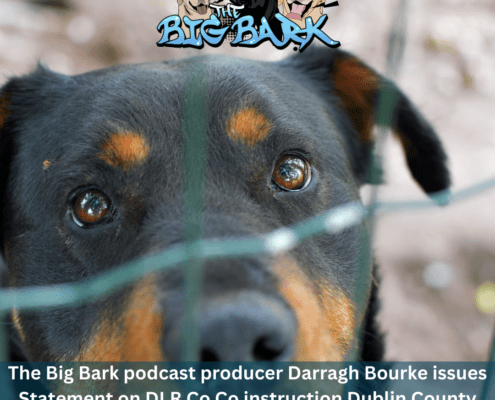
The Big Bark producer Blasts Dun Laoghaire Rathdown County Council over unlawful policy change re: restricted dogs

[Limerick Ireland, 12/07/2024] The Big Bark owner & producer Blasts Dun Laoghaire Rathdown County Council over unlawful policy change re: restricted dogs

  • The Big Bark producer blasts Dun Laoghaire Rathdown county council for unlawful policy change on restricted breeds
  • DLR policy change prohibits rehoming of restricted breed dogs from Dublin County Dog shelter
  • DLR advise the pound operator that all restricted breeds entering the pound from the DLR area are deemed unsuitable for rehoming.
  • DLR respond stating that decision made due to XL bully attack in Limerick in May
  • Local Councillors unaware of policy change according to Councillor Hugh Lewis
  • Call for chief executive of DLR Frank Curran to investigate and reverse policy decision immediately
  • The Big Bark calls for civil servant responsible for this policy change to be removed from any position of responsibility for animal welfare policies


Earlier today, I was made aware of the appalling decision by Dun Laoghaire Rathdown County Council to implement a policy change for Dublin County Dog Shelter, instructing the shelter that they were prohibited from rehoming Dogs which are featured on the restricted breeds list.

While there has been some level of expectation for quite some time that Ireland would follow in the footsteps of the UK in regards to an XL Bully ban (of which we do not approve), this policy change by DLR has left us at The Big Bark shocked, appalled and absolutely furious.

Upon being made aware of this policy change, we immediately contacted DLR for comment and clarification in which they confirmed the instruction was made following the recent XL Bully attack in Limerick, which by now we are all aware of. Their justification for euthanizing every restricted breed dog that is not claimed by an owner in the space of 5 days is a dog attack that happened 130 miles from their location, a dog attack that involved one breed of dog – an XL Bully.

They are using this as justification to euthanize any restricted breed dog that they wish, without consulting with rescues, dog owners, the brilliant staff who work so hard at the pound and as it so happens, they didn’t even consult the councillors who sit on DLR council. Hugh Lewis Councillor with DLR confirmed in a statement on his facebook page today that councillors were not informed of this policy shift.

We asked DLR what bye laws or what statutes were introduced into legislation that allowed such a policy shift and they have failed to provide an answer. Our own research has indicated that this policy change is completely unlawful. DLR council failed to answer this but provided the following unacceptable statement to The Big Bark.

DLR took the decision following the recent  horrific attack in Limerick. DLR advised the pound operator that all restricted breeds entering the pound from the DLR area are deemed unsuitable for rehoming.   As the restricted breeds are deemed unfit for rehoming, this left no option but to have the dogs put to sleep. Following Minister Heather Humphreys announcement on XL bully dogs this morning, DLR will review the position on the inclusion of all restricted breeds.  One XL Bully dog has been put to sleep. 

The pound has been advised that no further dogs are to be put to sleep until this review takes place. Until the review takes place, we are not in a position to partake in a debate.’

While we do welcome their decision to not put any further dogs to sleep until a review takes place, the initial policy change is unwarranted and unlawful. I put the question to DLR regarding what was the legal basis for this initial policy change? No provisions in any bye-laws or legislative statute exist that allow for such a policy shift from the current Control of Dogs Act which in its current form no way prohibits the rehoming of restricted breeds from pounds or shelters. In a statement to a Dublin based rescue, DLR confirmed that the policy of non-rehoming and euthanising of restricted breed dogs not claimed by their owner within 5 days would “continue until the report by the working group on control of dogs is published”. 

The staff at Dublin dog pound are to be commended for the tireless efforts and incredible work they have being undertaking since taking over services from the now defunct Ashton pound. Nobody has forgotten the barbaric cruelty that occurred in Ashton Pound. With this one policy change from DLR, this will undo all the hard efforts of the staff at Dublin Dog pound with a policy that utilises tactics previously attempted within Ashton pound. In 2o24, we have civil servants implementing these barbaric policies and instructing that dogs whose only crime is to wander out of their own homes be put to sleep. The danger here is that this will give way to other councils to attempt to follow suit and unqualified civil servant

At the Big Bark, we are calling on DLR to immediately and permanently reverse this policy change which in its current form is an immensely unlawful policy. The very fact that councillors, rescues and the staff at the pound were not consulted about this implies that the instruction came from civil servants with no authority to issue such an instruction.

We are also calling on Dun-Laoghaire Rathdown county council to immediately and permanently reverse this despicable policy change, and moving forward adhere to the legislation set out in the control of dogs act, in addition to local bye laws and other statutes and to remove the individual responsible for issuing this so called instruction to Dublin pound from their post of responsibility.

We wish to be clear, any individual(s) who can issue such a barbaric and appalling instruction without authority does not deserve to hold a position of responsibility and should not be making any decisions about animal welfare at all or implementing any policies regarding animal welfare with or without the correct authority to do so.

While this policy was implemented by a civil servant, we are calling on the Chief executive of Dun Laoghaire Rathdown county council to ensure this policy change is immediately reversed and that restricted breed dogs will be permitted to be rehomed from Dublin pound, unless government legislation via statute or local bye-law otherwise dictates. Until such time as such legislation is implemented, we would like to remind Mr Curran and his team of DLRs obligations and responsibilities to the welfare of animals in their via any pound or shelter under their jurisdiction and that in caring for these beautiful animals, they ensure that this is being done in line with legislation currently in effect and that civil servants in Mr Curran’s employ are not implementing any policy changes regarding the control of dogs or other animal welfare issues without first consulting with the correct authorities and determining if they have the legal precedent to even make such a policy shift.

In his role of Chief executive Mr Curran is ultimately responsible for the decisions that are made by civil servants in Dun Laoghaire Rathdown county council and we at The Big Bark along with all animal advocates across Ireland are holding him accountable for the actions of this civil servant who implemented this unlawful policy change and moving forward ensuring him and his team in DLR uphold the current animal welfare legislation in effect in the DLR jurisdiction and attempt to make no further similar unwarranted changes moving forward.

For more information – email [email protected] or phone 085-1094903


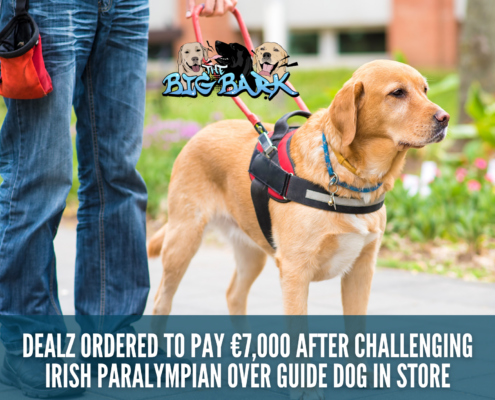
Dealz ordered to pay €7,000 after challenging Irish Paralympian over guide dog in store

Irish discount retailer Dealz has been ordered to pay €7,000 compensation to a blind Irish Paralympian who was challenged at its Ilac Centre outlet last year for bringing her guide dog into the store.

Nadine Lattimore, a blind paralympian who competed for Ireland at the 2012 paralympic games in London told the WRC that she was humiliated by security personnel in Dealz after she was called out for bringing her guide dog, Pilot, into the shop, which drew attention to her disability.

Ms Lattimore said she had gone to the Dealz store at around 9.30am to purchase helium balloons for an event later that day The WRC heard she was familiar with the shop and the staff, some of whom who had been helpful in the past.

Ms Lattimore said she became aware of voices or a commotion behind her as she was making her way carefully to the cash register to look for assistance.Although she did not think it was anything to do with her, a security guard approached her and said: “Excuse me. That dog is not allowed in here.” Ms Lattimore said she felt humiliated and asked to speak with the manager.

The WRC heard the manager arrived immediately and confirmed the dog was welcome in the store and the mistake should never have happened. He explained the issue had arisen from the rotation of security guards. In her testimony to the WRC, Ms Lattimore acknowledged an apology had been made, including one from the security guard. However, she expressed concern that the situation had arisen at all. Ms Lattimore said she should not have been put in a position of having to identify or explain her disability.

In her decision, Workplace Relations Commission Adjudication Officer Penelope McGrath said in this case, there is no ambiguity. This is evidenced by the presence of a guide dog with all the associated paraphernalia.  The Complainant painted a vivid image of how difficult standing her ground was. She had no sense of how many people were watching this interaction which took place in a public place.

Ms Lattimore explained that when she is out and about with Pilot it is clear that he is a guide dog. The Complainant showed me the reflective harness and vest together with the rigid handle frame. The dog also has a flash notice together with the medallion identifying the dog as a guide dog. I am satisfied that even the most cursory of glances would immediately identify Pilot as a working dog.

Ms Mcgrath ruled that Ms Lattimore had established a prima facie case of discrimination contrary to the Equal Status Act and had been made to feel “other”.

Awarding compensation of €7,000 to Ms Lattimore, Ms McGrath also directed that all Dealz staff be trained on a repeat basis on the provisions of the Equal Status Act and the associated duties of service providers. She also directed that signs stating guide dogs and assistance dogs are welcome should be displayed at entrances to their stores.

In a statement following the ruling, a spokesperson for the retailers said: “The tribunal confirmed that the individual involved was a security contractor, not a Dealz colleague, and that our store manager immediately stepped in to try and put matters right. “Nevertheless, we apologise again to Nadine for what happened at our Ilac Centre store last year. “It goes without saying service animals are, and always will be,  welcome in all our stores, and we’re pleased to have the opportunity to make that clear.”


🐾 The Importance of Puppy Socialisation for Both Puppies and Their Humans 🐾

🐾 The Importance of Puppy Socialisation for Both Puppies and Their Humans 🐾

Puppy socialisation is a crucial aspect of raising a well-behaved, confident, and happy dog. It involves exposing puppies to a variety of people, environments, sounds, and other animals during their critical development period, typically between 3 and 14 weeks of age. Let’s delve into why socialisation is so important and what the research says about its benefits and the consequences of neglecting it.

Why Socialisation is Crucial

1. Behavioral Development: Socialisation helps puppies learn how to interact appropriately with their environment. According to a study published in the Journal of Veterinary Behavior, early socialisation reduces the likelihood of behavioral problems such as aggression and fearfulness in adult dogs (Duxbury et al., 2003).

2. Stress Reduction: Well-socialised puppies are less likely to develop anxiety disorders. They learn to handle stress and unfamiliar situations with greater ease. Research by Scott and Fuller (1965) highlights that puppies exposed to varied environments and stimuli during their early weeks show lower stress responses as adults.

3. Bonding and Trust: Socialisation strengthens the bond between puppies and their humans. By exposing your puppy to different experiences together, you build trust and establish a strong, positive relationship. A well-socialised puppy is more likely to see their human as a source of safety and guidance.

4. Adaptability: Puppies that are properly socialised are more adaptable to changes and new environments. This is particularly important for families who travel or move frequently. According to the Journal of Applied Animal Welfare Science, dogs exposed to diverse environments during their socialisation period adapt better to new situations throughout their lives (Serpell & Jagoe, 1995).

Consequences of Poor Socialisation

1. Behavioral Issues: Puppies that are not adequately socialised may develop fear-based aggression or excessive shyness. The Journal of the American Veterinary Medical Association reports that dogs with inadequate socialisation are more likely to be relinquished to shelters due to behavioral issues (Salman et al., 2000).

2. Anxiety and Phobias: Lack of socialisation can lead to chronic anxiety and specific phobias (e.g., fear of loud noises, strangers, or other animals). A study in the Journal of Veterinary Behavior found that dogs not exposed to various stimuli in their early weeks are more prone to anxiety disorders (Appleby et al., 2002).

3. Health Risks: Unsocialised dogs may be more challenging to handle during veterinary visits, leading to stress for both the dog and the owner. This can result in owners avoiding necessary vet visits, potentially leading to overlooked health issues.

4. Decreased Quality of Life: Dogs that are fearful or aggressive often have a reduced quality of life. They might be confined more often or miss out on activities that enhance their well-being. Proper socialisation ensures dogs can enjoy a wide range of experiences without undue stress.

Tips for Successful Socialisation

1. Start Early: Begin socialisation as soon as your puppy is home and has received the necessary vaccinations.
2. Positive Reinforcement: Use treats and praise to create positive associations with new experiences.
3. Variety: Expose your puppy to different people, animals, environments, and sounds.
4. Controlled Environment: Ensure initial interactions are in a controlled, safe environment to prevent overwhelming your puppy.
5. Puppy Classes: Enroll in puppy socialisation classes where your puppy can interact with other dogs under professional supervision.

Conclusion

Socialising your puppy is an investment in their future well-being and happiness. It leads to a more confident, well-adjusted dog and a stronger bond between you and your furry friend. Remember, the effort you put into socialising your puppy will pay off in countless ways as they grow into a happy and well-behaved adult dog.

References:

– Duxbury, M. M., Jackson, J. A., Line, S. W., & Anderson, R. K. (2003). Evaluation of association between retention in the home and attendance at puppy socialization classes. Journal of the American Veterinary Medical Association, 223(1), 61-66.
– Scott, J. P., & Fuller, J. L. (1965). Genetics and the Social Behavior of the Dog. University of Chicago Press.
– Serpell, J., & Jagoe, J. A. (1995). Early experience and the development of behavior. In J. Serpell (Ed.), The Domestic Dog: Its Evolution, Behaviour and Interactions with People. Cambridge University Press.
– Salman, M. D., New, J. G., Scarlett, J. M., Kass, P. H., Ruch-Gallie, R., & Hetts, S. (2000). Human and animal factors related to the relinquishment of dogs and cats in 12 selected animal shelters in the United States. Journal of Applied Animal Welfare Science, 3(2), 93-106.
– Appleby, D. L., Bradshaw, J. W., & Casey, R. A. (2002). Relationship between aggressive and avoidance behaviour by dogs and their experience in the first six months of life. Veterinary Record, 150(14), 434-438.